Category Archives: Bookkeeping

The 9 Types of Accounting and How They Work

How to choose an accounting method for your business

If you set up your finances with cash-basis accounting, you’ll record financial transactions when the cash moves accounts. If you are still confused about choosing between cash and accrual methods, your resources have numerous tasks, or you need to invest your time in business development. Now is the time to make a move to an accounting outsourcing company.

Credits must be determined on the basis of the actual cost of goods acquired during the year and their inventory value at the beginning of the tax year. You can adopt and use this practice on the first tax return you file for the business, subject to IRS approval on examination of your tax return. You may be able to file an amended return and treat a liability as incurred under the recurring item exception.

Services

If you apply by fax, you can get an EIN within 4 business days. You must include your taxpayer identification number (SSN or EIN) on all returns and other documents you send to the IRS. You must also give your number to other persons who use your identification number on any returns or documents they send to the IRS.

  • You may also be subject to penalties if you deposit the taxes late.
  • You’ll need to provide your personal information, along with your business details, in order to open an account.
  • You generally can deduct either your actual expenses or the standard mileage rate.
  • These publications explain your tax responsibilities as an employer.
  • The IRS allows companies to use cash basis, accrual basis, a specialized method for certain income and expense categories, or a hybrid method.

Under the lower of cost or market method, the following items would be valued at $600 in closing inventory. A trade discount is a https://accounting-services.net/a-2023-guide-to-tax-returns-for-seed-stage/ discount allowed regardless of when the payment is made. You must reduce the cost of inventory by a trade (or quantity) discount.

QuickBooks Online: Best overall mileage tracking appQuickBooks Online: Best overall mileage tracking app

If you are reading this, then it probably means you’ve just launched or intend to start a new business in the near future. As you try to figure out which need to prioritize in your new venture, it is crucial that you first learn how to set up accounting for a new business. Work with your CPA to determine how you will meet your sales tax obligations before you do business. If you are self-employed, you will need to pay federal self-employment tax. This is essentially FICA and Medicare, only your payment covers both a withholding from your wage and the matching contribution from your company. Your business may also be required to pay state taxes in both your home state (where your business is registered) and in any states where your business has nexus.

How to choose an accounting method for your business

You may find the double-entry system better because it has built-in checks and balances to assure accuracy and control. When your checkbook balance agrees with the balance figured from the journal entries, you may begin reconciling your checkbook with the bank statement. Many banks print a reconciliation worksheet on the back of the statement. After checking your figures, the result should agree with your checkbook balance at the end of the month. If the result does not agree, you may have made an error in recording a check or deposit.

Compare top picks for business accounting software

We have reviewed and compiled a list of the top options to help you find the best mileage tracker app for your business. Xero and QuickBooks offer similar features at mostly similar prices. However, QuickBooks offers slightly more tools and a more intuitive user experience.

  • When choosing an accounting method, be sure to educate yourself on its implications.
  • If you’re looking to make a move up to a more powerful accounting software, Sage 50cloud Accounting may be a good choice.
  • However, if you use an accrual method of accounting, you can elect to postpone including the advance payment in income until the next year.
  • They can be purchased over the Internet and in many retail stores.
  • Generally, these are the same records you use to monitor your business and prepare your financial statements.
  • And, you deduct expenses in the year you incur them, whether you paid the expenses or not.

Starting a bookkeeping business is something you might be interested in if you naturally love numbers and want to break free of the traditional nine-to-five. It’s possible to offer bookkeeping services to clients in person or remotely, which may be ideal if you would prefer a work-at-home job. The IRS is committed to serving our multilingual customers by offering OPI services.

BUSINESS INTELLIGENCE SERVICES

When planning your marketing strategy, it’s important to think about the message you want to send to prospective clients. That message should be consistent across all of the channels you use to market your business, whether that includes YouTube, Facebook, TikTok, or another platform. What Accounting Software Do Startups Use? When you start any new business, you can’t expect customers or clients to magically find you. Instead, you’ll have to invest some time (and perhaps, money) in marketing your business. A business plan may be required if you plan to apply for business financing from banks or investors.

  • This deduction is known as the “section 179 deduction.” For more information about depreciation and the section 179 deduction, see Pub.
  • Because of this, there are certainly advantages to using the accrual accounting method.
  • Items included in closing inventory are considered to be from the opening inventory in the order of acquisition and from those acquired during the tax year.
  • The goal of a financial statement is to provide an accurate representation of a business’s financial performance.
  • Generally, an S corporation is exempt from federal income tax other than tax on certain capital gains and passive income.
  • As you can see from the description of cash accounting that we outlined above, it is the accounting method most suitable for this type of business.

You can choose to claim the loss separately as a casualty or theft loss. If you claim the loss separately, adjust opening inventory or purchases to eliminate the loss items and avoid counting the loss twice. When determining the retail selling price of goods on hand at the end of the year, markdowns are recognized only if the goods were offered to the public at the reduced price. Markdowns not based on an actual reduction of retail sales price, such as those based on depreciation and obsolescence, are not allowed. Using the retail method, determine your closing inventory as follows.


Book Value of Equity BVE Formula + Calculator

Ultimately, accountants must come up with a way of consistently valuing intangibles to keep book value up to date. In this case, the value of the assets should be reduced by the size of any secured loans tied to them. Manufacturing companies offer a good example of how depreciation can affect book value.

  1. Therefore, creditors use book value to determine how much capital to lend to the company since assets make good collateral.
  2. Generally, it is estimated that the fair values of cash and cash equivalents, short-term investments (less than one year), and long-term investments (beyond one year) are equal to 100% of the book value.
  3. Therefore, the calculation still works, but the resulting figure is meaningless.
  4. While market cap represents the market perception of a company’s valuation, it may not necessarily represent the real picture.
  5. Besides his extensive derivative trading expertise, Adam is an expert in economics and behavioral finance.
  6. When we divide book value by the number of outstanding shares, we get the book value per share (BVPS).

The book value of common equity in the numerator reflects the original proceeds a company receives from issuing common equity, increased by earnings or decreased by losses, and decreased by paid dividends. A company’s stock buybacks decrease the book value and total common share count. Stock repurchases occur at current stock prices, which can result in a significant reduction in a company’s book value per common share. It may not include intangible assets such as patents, intellectual property, brand value, and goodwill. It also may not fully account for workers’ skills, human capital, and future profits and growth. Therefore, the market value — which is determined by the market (sellers and buyers) and is how much investors are willing to pay by accounting for all of these factors — will generally be higher.

That means the market valuation is less than the book valuation, so the market might undervalue the stock. The following day, the market price zooms higher and creates a P/B ratio greater than one. That tells us the market valuation now exceeds the book valuation, indicating potential overvaluation. If the book value is based largely on equipment, rather than something that doesn’t rapidly depreciate (oil, land, etc.), it’s vital that you look beyond the ratio and into the components. Even when the assets are financial in nature, and not prone to depreciation manipulation, the mark-to-market (MTM) rules can lead to overstated book values in bull markets and understated values in bear markets. Book value’s inescapable flaw is the fact that it doesn’t accurately account for intangible assets of value within a company, which includes items such as patents and intellectual property.

You shouldn’t judge a book by its cover, and you shouldn’t judge a company by the cover it puts on its book value. In Year 1, the “Total Equity” amounts to $324mm, but the book value of equity (BVE) soon expands to reach $380mm by the end of Year 3. The process will be repeated for each year until the end of the forecast (Year 3), with the assumption of an additional $10mm stock-based compensation consistent for each year. Next, the beginning balance for the next period (Year 2) will be linked to the ending balance of the prior period (Year 1). Suppose we’re tasked with projecting the “Total Equity” line item of a company for a 3-year forecast period using roll-forward schedules. We’ll now move to a modeling exercise, which you can access by filling out the form below.

You are unable to access investinganswers.com

For the purpose of disclosure, companies break these three elements into more refined figures for investors to examine. Investors can calculate valuation ratios from these to make it easier to compare companies. Among these, the book value and the price-to-book ratio (P/B ratio) https://intuit-payroll.org/ are staples for value investors. Closely related to the P/B ratio is the price-to-tangible-book value ratio (PTVB). The latter is a valuation ratio expressing the price of a security compared to its hard (or tangible) book value as reported in the company’s balance sheet.

It is possible to get the price per book value by dividing the market price of a company’s shares by its book value per share. It implies that investors can recover more money if the company goes out of business. The book value of a company is equal to its total assets minus its total liabilities. The total assets and total liabilities are on the company’s balance sheet in annual and quarterly reports. For example, a company has a P/B of one when the book valuation and market valuation are equal.

Book Value of Equity vs. Market Value of Equity: What is the Difference?

From Year 1 to Year 3, the ending balance of the common stock and APIC account has grown from $200mm to $220mm. Market value is another important metric; however, NBV and market value typically aren’t equal. Some assets may have remaining value that can be derived after the end of their useful life. It may have a salvage value that will make it useful in another way such as being sold for scrap parts or metal. While corporate raiders or activist investors holding significant stakes can expedite this recognition, investors shouldn’t always rely on external influences.

It is important to understand that BVPS in the share market is different from the market value of a share. The market value is determined by the stock’s current market price, which can fluctuate based on supply and demand in the stock market. In personal finance, an investment’s carrying value is the price paid for it in shares/stock or debt.

Would you prefer to work with a financial professional remotely or in-person?

In other words, it is calculated by taking the original cost of the asset and subtracting the accumulated depreciation or amortization up to the current date. Consequently, it can be conceptualized as the net asset value(NAV) of a company, obtained by subtracting its intangible assets and liabilities from the total assets. For instance, if a vehicle costs ₹1,00,000 and its accumulated depreciation amount is Rs. 50,000, then, the book value in the market price, and book value of the stock market of this vehicle will be Rs. 50,000. The market value per share is a company’s current stock price, and it reflects a value that market participants are willing to pay for its common share. The book value per share is calculated using historical costs, but the market value per share is a forward-looking metric that takes into account a company’s earning power in the future. With increases in a company’s estimated profitability, expected growth, and safety of its business, the market value per share grows higher.

The equity value recorded on the books is significantly understated from the market value in most cases. For example, the book value of Apple’s shareholders’ equity is worth around $64.3 billion as of its latest 10-Q filing in 2021. Normally the NBV is significantly lower than the market value for the first few years of the asset’s useful life, as the asset is still in good working condition and retains its value. It makes for fairer and more accurate accounting records and helps to express a true approximation of the company’s total value.

If XYZ can generate higher profits and use those profits to buy more assets or reduce liabilities, the firm’s common equity increases. If, for example, the company generates $500,000 in earnings and uses $200,000 of the profits to buy assets, common equity increases along with BVPS. On the other hand, if XYZ uses $300,000 of the earnings to reduce liabilities, common equity also increases. Book value per common share (or, simply book value per share – BVPS) is a method to calculate the per-share book value of a company based on common shareholders’ equity in the company. The book value of a company is the difference between that company’s total assets and total liabilities, and not its share price in the market.

In case the value obtained is negative, it means that the asset has a net loss or it can be said that its losses exceed its profits, thus making it a liability. Creditors who provide the necessary capital to the business are more interested in the company’s asset value. Therefore, creditors use book value to determine how much capital to lend to the company since assets make good collateral.

Other potential problems in using the P/B ratio stem from the fact that any number of scenarios, such as recent acquisitions, recent write-offs, or share buybacks can distort the book value figure in the equation. When searching for undervalued stocks, investors should consider freshbooks for nonprofits multiple valuation measures to complement the P/B ratio. Assume that a company has $100 million in assets on the balance sheet, no intangibles, and $75 million in liabilities. Therefore, the book value of that company would be calculated as $25 million ($100M – $75M).

However, the market value of equity stems from the real, per-share prices paid in the market as of the most recent trading date of a company’s equity. One common method to compare the book value of equity to the market value of equity is the price-to-book ratio, otherwise known as the P/B ratio. For value investors, a lower P/B ratio is frequently used to screen for undervalued potential investments. The book value of equity (BVE), or “Shareholders’ Equity”, is the amount of cash remaining once a company’s assets have been sold off and if existing liabilities were paid down with the sale proceeds. The carrying values of an asset can be calculated by subtracting the total liabilities of that particular asset from its total assets.

For instance, banks or high-tech software companies often have very little tangible assets relative to their intellectual property and human capital (labor force). In this example, we have considered two main sections of the balance sheet – Assets and Liabilities. The total assets for ABC Ltd amount to Rs. 77,50,000, while the total liabilities amount to Rs. 32,00,000.

Using the XYZ example, assume that the firm repurchases 200,000 shares of stock and that 800,000 shares remain outstanding. Besides stock repurchases, a company can also increase BVPS by taking steps to increase the asset balance and reduce liabilities. Assume, for example, that XYZ Manufacturing’s common equity balance is $10 million, and that 1 million shares of common stock are outstanding.

Quickbooks Payroll vs OnPay 2023: Payroll Software Comparison

The lowest tier, Simple Start, costs $30 per month for the long term and doesn’t include all features. You need to upgrade to Essentials, costing $60 per month, to handle bills and get more-detailed reports. Both QuickBooks and Quicken connect to your bank account and download transactions automatically. With Quicken data is saved on your computer locally, though it can go to the cloud if you want to use the mobile app. Knowing your personal and business expenses by category can assist you in making the best financial decisions.

  1. If you sign up for the Elite plan, you can choose a callback option to limit the time spent waiting on the phone.
  2. But if you pay employees in multiple states, a QuickBooks competitor like Gusto with free multi-state payroll will cost less in the long run.
  3. Square Payroll starts at $6 per person paid per month, which makes it one of the most affordable payroll options for small-business owners who only pay contractors.

With budget tracking software in your arsenal, you’re better positioned to make informed financial decisions in line with your financial goals. If you use another Intuit or Square product already (say, QuickBooks Online accounting software or Square’s POS system), it will likely be a clear choice which platform is better suited for your business. After all, being able to sync multiple business platforms will help you more easily manage your business finances. However, if you don’t already use a Square of QuickBooks product, you’ll have to consider more factors before making a decision.

Advanced Inventory Management Systems

QuickBooks features a smart invoicing system that allows you to edit invoice templates to your liking. You can change the font, add your business logo, and set up different languages and currencies to increase efficiency and professionalism. Modern businesses are embracing remote access to let their employees work from any location.

Small-business financial tracking

If you’re a solo business owner and want to handle all of your finances in one place, Quicken is a better choice. It’s also good for investors who want to track and analyze their portfolios and other aspects of their finances. You can use Quicken Home & Business for $10.99 monthly, though it’s cheaper if you don’t need business features. Paying annually yields savings compared with the monthly subscription. Quicken and QuickBooks both work best on a laptop or desktop computer. The mobile versions offer helpful features on the go, but you can’t do everything with the same ease as using the computer versions.

And QuickBooks Payroll lacks some key HR features, so if you want more employee benefits and in-house insurance brokers, you’ll get more bang for your buck with Gusto or Paychex. Enter the current hours worked for each employee, taking into account any overtime, sick leave, or bonus payments. QuickBooks will automatically calculate paychecks based on the hours and rates provided, including appropriate tax withholdings.

The most notable difference, aside from price, between QuickBooks Online and QuickBooks Desktop is the Online version is cloud-based. The mobile app for Online is robust, and Desktop’s mobile app is so limited, that it essentially functions as a receipt uploader. Working from the cloud means you need an internet connection, so a poor signal or an intermittent connection can be an issue. With the expense tracking feature, QuickBooks provides you with key financial reports on expenses and income and profit and loss reports that help you keep tabs on your finances at all times.

QuickBooks Payroll’s fast facts [4.1 stars out of 5]

Some businesses struggle with choosing a pay schedule if they have limited funds. We like that QuickBooks makes this easier by offering next-day and same-day direct deposit, depending on your plan. If you have the Core plan, you’ll receive free next-day direct deposit; Premium and Elite packages deliver direct deposits the same day you process payroll. Fast direct deposits let you hold onto cash longer, which helps with cash flow management. QuickBooks Payroll also supports direct deposit alternatives like pay cards. QuickBooks Payroll lists pricing for each plan tier and lets you sign up online.

QuickBooks Payroll Core + Quickbooks Essentials

Every QuickBooks Payroll plan has the option to automatically run payroll for salaried employees paid via direct deposit and hourly employees with default hours paid via direct deposit. Before payroll runs each pay period, you’ll get a preview email with the opportunity https://personal-accounting.org/ to make changes. Once your employees are paid, QuickBooks Payroll will send you a confirmation text. However, if you use accounting software other than QuickBooks Online or have employees in multiple states, it’s worth taking a closer look at the competition.

This guarantee means that QuickBooks Payroll will pay any IRS fines incurred by a QuickBooks-caused problem. We’ll dive in to free options and low-cost options and their features, just in case you’re not satisfied. Fortunately, services like QuickBooks Payroll can streamline and simplify several areas of the payroll process while providing HR and taxation features. Learn more about QuickBooks Online Payroll to determine whether it is an ideal solution for your business.

For instance, workers’ compensation is powered by AP Intego and health benefits are provided in partnership with SimplyInsured. The Ascent is a Motley Fool service that rates and reviews essential products for your everyday money matters. We’re firm believers in the Golden Rule, which is why editorial opinions are ours alone and have not been previously reviewed, approved, or endorsed by included advertisers. Editorial content from The Ascent is separate from The Motley Fool editorial content and is created by a different analyst team. The good news for people with taxable brokerage accounts is that you aren’t just automatically going to have to pay the IRS money — even if the assets in your account make a profit. Workday products cover quite a bit, including HR and industry-specific use cases like healthcare supply chain management.

Recommended Alternative: GustoSPONSORED

Notably, Intuit outsources HR support to a third-party company, Mineral. This is worth considering if you plan to add the company’s HR services to an existing payroll account. Since OnPay and QuickBooks Payroll are two of the best pros and cons of quickbooks payroll payroll solutions for small and midsize businesses, it can be hard to determine which one is right for you. Below, we dive into each payroll software solution’s strengths, weaknesses, features and pricing to help you decide.

In the other states, the program is sponsored by Community Federal Savings Bank, to which we’re a service provider. This publication is provided for general information purposes only and is not intended to cover every aspect of the topics with which it deals. You must obtain professional or specialist advice before taking, or refraining from, any action on the basis of the content in this publication. The information in this publication does not constitute legal, tax or other professional advice from Wise Payments Limited or its affiliates.

In other words, you’re covered even if QuickBooks isn’t responsible for the error. There are many excellent payroll processing apps such as OnPay, Gusto, ADP, Paychex, etc. available in the market. You can add team member—employee or independent contractor—details manually or import from external sources, such as spreadsheets or previous payroll applications. If you are adding them manually, you can start just with the name and email address. The other details required for running payroll, such as date of joining, hourly rates, paid time off, etc., can be added later. Even if you do owe taxes on the money in your investment account, the good news is that you may not have to pay that much.

What to Know About Filing a Business Tax Extension

Like an S corporation, a partnership does not owe tax itself, but is generally treated as an extension of the partners. Partnerships must provide a Schedule K-1 to all partners, detailing their share of the partnership’s income and deductions for the year. The extended due date is 45 days after the original due date of the final report. A business is considered to have nexus in Philadelphia and is subject to BIRT if it has generated at least $100,000 in Philadelphia gross receipts during any twelve (12) month period ending in the current year. To stay prepared all year and be ready for tax season, incorporate helpful tax solutions, like tax apps and business tax software, into your accounting system.

How To File A Business Tax Extension Online

Remember, a tax extension doesn’t give more time for payment. After you file the extension, you’ll have until October 15 to gather your documents and finish your filing. When you complete your return, you should include the amount you’ve already paid in the payments section of your Form 1040.

Guidance on $600 Income Tax Rebates

This article explains the process of filing a tax extension for different kinds of businesses and business owners, including an easy way to file by going online. Remember, though – your tax payment deadlines don’t change. As long as you pay your tax estimate when you file your tax extension, there should be no penalty charges. If spring is your busy season, file for a business tax extension.

What is a CA file extension?

A CA file contains initial cache data used by Telnet network communication protocol. The telnet command line program on server editions of Windows can create and read such files. Another type of CA file contains information about a Certificate Authority which can be used by OpenSSL.

The easiest way to get an extension is to pay all or part of your income tax due and indicate that the payment is for an extension, using the IRS Direct Pay system, EFTPS, or your credit/debit card. The IRS website has extensive directions for both forms which is helpful, especially if this is your first time filing an extension. You also need to make your request in a timely manner, which means well before April 15!

Ready to File a Tax Extension for your Business?

If tax is due, interest accrues from the original due date of the tax. If you expect to owe tax when you file your return, the best policy is to make a payment. Extension payment vouchers are available for personal income tax, corporate income and franchise tax, fiduciary income tax and pass-through entity information https://turbo-tax.org/how-to-file-a-business-tax-extension-online/ returns. Businesses can file Form 7004 and get an automatic extension of up to 6 months to file their business income tax returns. The extended deadline will vary based on the business type and the tax year. A tax extension is a request for additional time to file your federal income tax return with the IRS.

While you won’t be filling out the paper Form 4868 line-by-line, your tax extension information will be sent online to the IRS. You can file an extension for your taxes by submitting Form 4868 with the IRS online or by mail. Filing an extension for your taxes gives you additional months to prepare your return no matter the reason you need the extra time.

Tax extensions for overseas taxpayers and military members

A copy of the federal Form 7004 shall not be mailed to the Department of Revenue (DOR) before filing the return. Some states accept an approved federal Form 7004 as an extension of time to file business tax returns at the State level. However, some states require businesses to file separate state forms to obtain a business tax extension. An extension of time to file your return does NOT extend the time to pay.

The IRS may hit your business with costly penalty and interest charges if you underestimate your taxes, file your return late, or do not furnish certain information by the due date. The IRS does not offer an additional extension beyond the first extension. You can file a return after the extended due date; just expect to pay additional penalties. You should file as soon as possible to avoid additional penalties. The IRS notes that a failure-to-file penalty is generally more than a failure-to-pay penalty.

The May 17 tax deadline is almost here. Here’s what you should know about filing an extension.

You may use bFile to file employer withholding, sales and use tax, and withholding reconciliation returns. Do not use this form to remit estimated tax for Form 510 or to remit employer withholding https://turbo-tax.org/ tax. If the corporation is required to make multiple payments it will use Form 500D for each of the additional payments. The Comptroller of Maryland has discontinued the use of Form 500DP.

Does California accept federal extension for corporations?

The state of California doesn't require any extension Form as it automatically grants extensions up to 7 months. File Form 7004 and Extend your Federal Business Income Tax Return Deadline up to 6 Months.

In 2023, a tax extension request that was submitted by April 18, 2023, moves the tax-filing deadline to Oct. 16, 2023. The business tax extension Form 7004 will only extend the deadline for filing business tax returns, the tax payments must be paid by the original deadline. You may request an extension on filing your business tax return by using Form 4868 or Form 7004, depending on the type of business you own. Even if you apply for an extension for filing your business income tax forms, you can’t extend the payment deadline.

What Are the Different Types of Accounting Systems? Options Explained

different types of accounting

Discover the secrets to IT leadership success with these tips on project management, budgets, and dealing with day-to-day challenges. These are the assets or possessions that do not have physical existence but can be measured in terms of money. Since M/s Sharma is the Giver in this transaction, his Personal Account will be credited with Rs 10,00,000. These accounts relate to companies and institutions such as Kapoor Pvt Ltd A/c, Booker’s Club A/c etc.

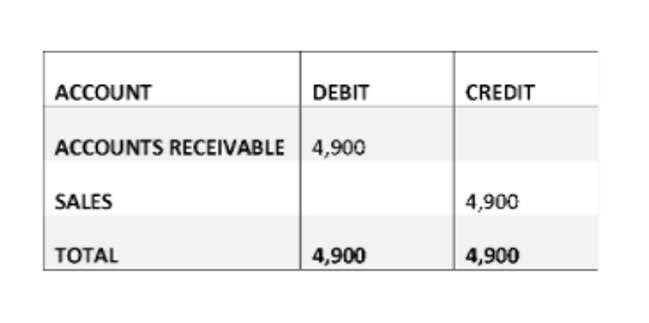
  • To illustrate double-entry accounting, imagine a business sends an invoice to one of its clients.
  • This makes compiling the other account types easier for systematic review and retrieval.
  • Generally, auditors work as part of a team or department, but some auditors work from home, while others travel to their clients’ places of business.
  • This involves their construction, installment, application, and observation.
  • Management accounting is a challenging and rewarding career that can offer opportunities for advancement and high earning potential.

All financial statements, such as a balance sheet and an income statement, must be prepared in a certain way. This tends to be according to the generally accepted accounting principles. Those in the management accounting field are concerned with the process of accumulating accounting information for internal operational reporting. A career track in this area can eventually lead to the controller position, or can diverge into a number of specialty positions, such as cost accountant, billing clerk, payables clerk, and payroll clerk. Tax accounting ensures companies are tax compliant and focus on company taxes. Financial accounting focuses on preparing financial statements and tracking financial transactions.

Cost accounting

This allows them to view short-term cash transactions and long-term financial transactions related to their business. Cash accounting method is ideal for small businesses which prefer a straightforward way to measure income and expenses. However, revenue won’t appear on the ledger until the payment is received. Cash-basis accounting is used alongside single-entry accounting because they are both the simplest accounting methods. The focus here is on generating financial statements like budgets, and product costings.

  • Ultimately, accounting gives stakeholders a better understanding and broader perspective of the raw data meticulously recorded by bookkeeping, transforming numbers into actionable business strategies.
  • Under the accrual method, transactions are recorded when they are incurred rather than awaiting payment.
  • Overhead costs are ongoing business expenses not directly attributed to creating products or delivering services.
  • If the IRS ever conducts an audit on a company, it looks at a company’s accounting records and methods.
  • Businesses can also track their data efficiently through the Everlance mobile app, automatically tracking drivers’ mileage using GPS.
  • Check out our accounting category and get updates on the latest trends and insights.

Auditors may also perform operational audits to assess an organization’s internal controls or compliance with standards such as Sarbanes-Oxley. Managerial accountants, also known as management accountants, collect financial data, analyze it, compile it into reports and then present it to the company’s management. Unlike the previously mentioned financial statements, these reports are intended for internal use only and aren’t governed by external regulations. Among these are the cash flow statements, which track the movement of money, balance sheets that offer a snapshot of a company’s assets and liabilities, and income statements, showcasing revenue and expenses. Simply put, a chart of accounts (or COA) is an organizational tool that provides financial oversight of all of a business’s transactions and accounts. Like a single entry system of accounting, a cash accounting method is preferred by small businesses because it is simple to implement and saves time.

How does a liability account differ from an asset account in accounting?

Investors, lenders, and other creditors are the primary external users of accounting information. Investors may be deciding to buy shares in the company, while lenders need to analyze their risk in deciding to lend. It is important for companies to establish credibility with these external users through relevant and reliable accounting information.

The solution’s multicurrency support also facilitates easy reporting of international business activity. A project accountant focuses on the needs of project delivery, including tracking, reporting, and analyzing the financial results of a project. Project accountants provide regular reports to management and executives on whether a company’s project is over or under budget. They may also draft project proposals so teams can see the financial scope of a project, including how much it could potentially cost or earn.

What are the three key areas of auditing?

Cost accounting manages company spending by focusing on cost records and reports. Financial accounting focuses on keeping track of all financial transactions and preparing financial statements. different types of accounting Generally accepted accounting principles (GAAP) requires accrual accounting. Accounting services can come from an in-house accounting team or a third party that offers services for a fee.

  • That said, small businesses usually aren’t required to use GAAP and its accrual method.
  • With financial accounting, businesses can use both accrual and cash accounting methods to determine net income.
  • It is a type of accounting used internally to assess a company’s operations.
  • Any time you sell a product or service, your accounting books must be updated to reflect each transaction.
  • There are specialties available, such as the information systems auditor and the environmental auditor.

Rent, utilities, office staff wages, maintenance staff wages, supplies, equipment repairs, taxes, etc., are all considered overhead costs. Managerial accountants also analyze financial records to make predictions in various contexts such as operations, logistics and risk. The larger and more complex the business, the more likely it is to benefit from hiring a good managerial accountant. And if the company in question is public, its financial statements must also comply with the Securities and Exchange Commission (SEC) regulations. You may choose to hire a public accounting firm to handle a specific task, like preparing for an audit or doing due diligence for mergers and acquisitions.

How to Become a Bookkeeper Career Path and Job Description

is it hard to become a bookkeeper

The programs are often entirely online, providing easy and convenient access to educational materials, testing platforms, and more. These certificate programs equip professionals with the skills they need to do their job well and stand out among other job candidates. Students who pursue certificates like these will acquire career fortifying skills. Self-taught bookkeepers use a variety of courses, seminars, books, and other online resources to learn about bookkeeping and accounting. You can also learn how to use accounting software, like QuickBooks, which can teach you about the basics of bookkeeping as well as the technology https://www.bookstime.com/ used by many businesses. Another way to get valuable bookkeeping experience and on-the-job training is through an internship.

is it hard to become a bookkeeper

Is bookkeeping hard for beginners?

Reliance on manual, paper-based bookkeeping methods can signify that it’s time to hire a better bookkeeper. In an increasingly digital and automated world, manual processes can lead to inefficiencies, errors, and limitations in managing financial records. A proficient bookkeeper should possess the skills and knowledge to collect, organize, and analyze financial data effectively. They should be able to promptly generate comprehensive financial reports, such as income statements, balance sheets, and cash flow statements. By hiring a better bookkeeper, businesses can benefit from accurate forecasting and proactive cash flow management.

Discover more from Accounting Professor.org

Businesses are subject to various financial and tax regulations that require accurate and timely record-keeping. Effective bookkeeping ensures compliance with these regulations, reducing the risk of penalties or legal issues. It also simplifies preparing financial is it hard to become a bookkeeper statements, tax returns, and other necessary reports required by regulatory authorities.

is it hard to become a bookkeeper

Which bookkeeping certification is best?

is it hard to become a bookkeeper

Hiring https://x.com/BooksTimeInc a bookkeeper who understands and utilizes technology and automation can significantly improve the efficiency and accuracy of bookkeeping operations. It allows smoother workflows, faster data processing, and better access to critical financial information. Ultimately, a bookkeeper who embraces technology can contribute to the success and growth of the business by leveraging the advantages that digital tools provide. They provide insights into the company’s profitability, ability to meet short-term obligations, asset management efficiency, and other critical financial indicators. Hiring a better bookkeeper can help address these issues by ensuring timely and accurate preparation and submission of tax returns and compliance documents.

  • Lastly, a skilled bookkeeper demonstrates professionalism and ethical behavior.
  • From assessing your current level of education to choosing a certification program, our guide will help you.
  • An advisory board of educators and other subject matter experts reviews and verifies our content to bring you trustworthy, up-to-date information.
  • According to AICPA, CPAs earn 10%-15% more than the average starting salary for accountants.

How Much Does a Bookkeeping Certification Cost?

Whether you choose a self-taught method or prefer standard classes, you’ll need to learn the basic skills to enter the field of bookkeeping. Accounting courses, Quicken, MS Office, basic business law, and business communications will give you a solid foundation on which to build your career. Bookkeeping is a critical function for any business or organization because financial health should inform every decision. However, not all bookkeepers have the necessary skill set to interpret data in ways that help businesses drive peak performance.

  • According to 81 percent of CBs who interviewed for a new job after becoming certified, having a certification contributed to getting the interview 4.
  • Two of the most common are single-entry bookkeeping and double-entry bookkeeping.
  • If you want to take a course from AIPB or NACPB, you need to have some experience with bookkeeping.
  • If you do have a degree, however, you can use it as a selling point in your marketing.

Are Volunteer Vacations Tax Deductible? Volunteer Vacations

tax deductions for volunteer work

As you might guess, the major public charities are qualified organizations, and many lesser known charities qualify as well. Reasonable travel expenses will be tax deductible if tied to your volunteer work. Arriving via a private plane will likely raise a red flag unless there is some specific reason for it. Meals for volunteer service are 100% deductible and not subject to the same 50% limitations as meals for business. Volunteers are responsible for maintaining accurate records of their expenses.

  • Keep in mind that enjoying your volunteer work doesn’t rule out a deduction.
  • Personal state programs are $39.95 each (state e-file available for $19.95).
  • The IRS doesn’t allow you to deduct the time you spend doing volunteer work.
  • Buying or cleaning clothing the volunteer wears during the service, which may also be used when the person isn’t volunteering, is not eligible as an out of pocket expense.
  • That said, there are still benefits to itemizing charitable contributions.
  • To qualify for this tax deduction, the expenses you are planning to deduct must directly relate to the charity where you volunteer.

Supporting Identification Documents must be original or copies certified by the issuing agency. Original supporting documentation for dependents must be included in the application. For tax years beginning after 2017, applicants claimed as dependents must also prove U.S. residency unless the applicant is a dependent of U.S. military personnel stationed overseas. A passport that doesn’t have a date of entry won’t be accepted as a stand-alone identification document for dependents. Bookkeeping Let a professional handle your small business’ books. Finances Spruce A mobile banking app for people who want to make the most of their refund.

Credits & Deductions

When volunteers buy food or drinks for their own meals and snacks, those expenses are not deductible if the work doesn’t require the volunteer to be away from home overnight. The out-of-pocket expenses a volunteer incurs in service to a member of a charitable class may be deductible, but only ttps://turbo-tax.org/ if the recipient is chosen by the organization the volunteer serves. If the volunteer chooses to help someone he or she knows, the out-of-pocket expenses to that person are not deductible. Before 2020, you could deduct charitable contributions up to 60% of your adjusted gross income.

tax deductions for volunteer work

The CARES Act raised this limit, allowing you to deduct up to 100% of your AGI, and this temporary change was extended through 2021. That said, there are still benefits to itemizing charitable contributions. Available only at participating H&R Block offices.

By accessing and using this page you agree to the Terms and Conditions.

It is important to distinguish between donating professional services and simply volunteering time and labor. Learn what kind of pro bono work is deductible at tax time. You work for several hours each morning on an archaeological dig sponsored by a charitable organization. The rest of the day is free for recreation and sightseeing. You cannot take a charitable contribution deduction even though you work very hard during those few hours. To qualify, your unreimbursed out-of-pocket expenditures must relate directly to the charity.

tax deductions for volunteer work

But, organizations should also keep accurate records by requiring volunteers to submit receipts, mileage records and other documentation before they are reimbursed. For the 2021 tax year, that benefit has expanded even further. Instead of a $300 deduction per return, it’s $300 per person. So if you file jointly with the standard deduction, you can deduct up to $600 for charitable contributions.

Which Volunteer Expenses Are Tax Deductible?

A volunteer can deduct unreimbursed expenses incurred in attended a convention related to charity’s work. These include transportation expenses and a reasonable amount for meals and lodging, while away from home overnight. This publication explains how to claim a deduction for your charitable contributions. Volunteers who provide professional services for free to a qualifying nonprofit organization cannot claim a tax deduction for the value of their time or services. Pro bono service is work that you do or provide without charge.

  • Some organizations are able to reimburse volunteers for at least part of their out of pocket and other volunteer related expenses.
  • However, in order to take those tax deductions, volunteers must itemize their deductions when filing their annual tax return.
  • You oversee the breaking of camp and you transport the group home.
  • You are required to meet government requirements to receive your ITIN.
  • Parking fees and tolls also qualify for the tax deduction.

Written documentation from the charity about the nature of volunteering activity and the need for related expenses to be paid. The substantiation requirements for deducting unreimbursed volunteer expenses differ according to the amount of the expenses. By clicking “Find a Lawyer”, you agree to the Martindale-Nolo Texting Terms. Martindale-Nolo and up to 5 participating attorneys may contact you on the number you provided for marketing purposes, discuss available services, etc.

File

If you incur fundraising expenses, such as hosting a party for the charity, ka-ching! The expenses of that party are tax deductible. The cost of the uniform and the costs to clean it are deductible. You may also deduct parking fees and tolls, as well as mileage at 14 cents per mile. If you use public transportation during your volunteering, that’s tax deductible as well. If the charitable organization requires volunteers to purchase a specific uniform to be worn when volunteering, this is a tax deductible expense.

What are the benefits of volunteer work?

Being a volunteer has lots of benefits. It can bring meaning and purpose to your life, while increasing your self-esteem and wellbeing. Volunteering can also relieve stress, and alleviate symptoms of depression. As well as having a positive impact on your community, volunteering can improve your relationships.

The purpose of volunteering isn’t to get something in return, we just thought it wouldn’t hurt to look into receiving a tax deduction–if you qualify for it. So in short, is volunteer work tax-deductible? Any volunteer of a §501 tax-exempt organization tax deductions for volunteer work may be entitled to some deductions for out-of-pocket costs incurred while volunteering and receive a deductible charitable contribution for those expenses. If you’re volunteering, believe it or not, the IRS would like to thank you for your service.

However, some expenses resulting from the volunteering, such as mileage, parking and tolls, trips, uniforms and out-of-pocket expenses can be claimed. I’m sure you are wondering what tax deductions your can get for your charity work? Before taking a tax deduction for your expenses incurred while volunteering, here are a few things to consider. Volunteers should keep written records to verify any expenses they claim as tax deductions. Records should also be kept when reimbursements are paid to prove that the payment is not subject to income tax. Any personal expenses incurred when volunteering cannot be written off on taxes.

In addition to requirements just noted, the volunteer must document the amount of fuel used and the cost per gallon. You are not allowed to deduct ordinary auto expenses such as insurance, maintenance, tires or depreciation as if you were using your vehicle for business. Line balance must be paid down to zero by February 15 each year.

Corporation Calculator: S-Corp Savings

As a general rule of thumb, it only makes sense to file taxes as an S corp if there is enough net profit to pay owners a reasonable salary and at least $20,000 in annual distributions. This means that income from the S corp in the form of reasonable salaries and distributions passes through to the owner-employee’s individual income tax return. This means that the business’s income passes through to the owners and they only pay income tax once at the individual level. S corporations are known for their tax savings, particularly their avoidance of double taxation and the ability to reduce the amount you pay for Social Security and Medicare (self-employment tax). To determine whether an S corporation is right for your business, let’s start with explaining what an S corporation is and then walk through how may save you money.

A limited liability partnership (LLP) or professional corporation must be created instead. A limited liability company is a legal designation that can protect small-business owners from personal liability in business obligations. LLCs can have one owner (single-member LLC) or more than one owner (multi-member LLC). One key benefit of being taxed as an S Corporation is the reduction in self-employment and payroll taxes, which can be substantial when compared to operating as a sole proprietorship or partnership. As a general rule of thumb, it only makes sense to file taxes as an S corp if there is enough net profit to pay owners a reasonable salary and at least $10,000 in annual distributions.

  1. An LLC cannot issue stock and does not have shareholders but must pay members according to the LLC’s articles of organization.
  2. Otherwise, you have to wait until the following year to get the S corporation tax status.
  3. But if your business is taxed as an S-corp, you’ll only pay payroll taxes on your reasonable salary of $70,000.
  4. This tax, often referred to as FICA, Medicare, or Social Security tax, is calculated on your entire income.
  5. The amount of payroll tax your S corporation pays depends on the amount of your “reasonable salary.” Paying yourself a low salary and taking a high distribution will bring you the most savings.

S corporations are required to pay the business owner a “reasonable wage”. This wage is subject to employment taxes and constitutes business deductibles, striking a balance between S corporations’ differences between debt and liabilities tax savings and IRS’s tax collection. By only paying income tax on distributions, an S corp saves the business owner(s) money on self-employment taxes under the right circumstances.

How Does an S Corporation Tax Calculator Work?

However, when carefully managed, S corps can significantly reduce tax liabilities. We’ve developed our own S corp vs. LLC calculator, which you can use in order to determine whether electing S corp status would make financial sense for your business. There are several important differences between an LLC and a business structure that has elected S corp status. Note the ZenBusiness S corporation service only applies to those forming an LLC.

S-Corp Calculator

The business must also designate a registered agent service and incorporate prior to filing for S Corp status. If you are incorporated as an LLC, you may declare that the LLC is taxed as an S Corp by filing Form 2553 with the IRS. In addition to taxes, you’ll have to consider a few other expenses before deciding whether forming an S corporation is right for you. For example, depending on your state’s rules, industry, and business size, you may need to provide short-term disability insurance. S corporations will also need to pay unemployment taxes, even though a business owner who is considered both employer and employee may have difficulty claiming unemployment benefits.

If you’re not taxed as an S corporation and you’re taxed as an LLC instead, you’ll have to pay employment tax on your full salary. A sole proprietorship automatically exists whenever you are engaging in business by and for yourself, without the protection of an LLC, Corporation or Limited Partnership. Please remember this information is for clarifying purposes only, we recommend consulting with a certified tax professional to accurately understand your tax liability. So, the differences lie in the tax implications and administrative requirements of the two structures. While it may depend on your specific circumstances, in general, a default LLC tax structure is better than an S corp for holding rental properties.

Forming an S Corporation

LegalZoom provides access to independent attorneys and self-service tools. LegalZoom is not a law firm and does not provide legal advice, except where authorized through its subsidiary law firm LZ Legal Services, LLC. Use of our products and services is governed by our Terms of Use and Privacy Policy.

Depending on the type of business that you’ll be operating, your state may require a permit or license to be in place before you can begin operating your business. Also, if the LLC will be selling goods that are subject to a local sales tax, you’ll need to file with your local tax office so that you can collect the sales taxes and remit them to the state. An operating agreement is an internal document that stipulates how the LLC will be run and how it will be managed. The operating agreement should include procedures for how members will be managed if there is more than one and how profits and losses will be divided between the members.

Election as an S corporation does not need to take place during a business’ first year in operation. Tax considerations are a major factor that people consider when setting up a business, as the right type of structure for you will result in the lowest possible annual tax bill. For businesses that want to focus on growth and scalability, it may be better for you to form an S corp instead of starting an LLC. However, it’s important to remember that not all companies are eligible to be S corporations, and certain shareholder limitations need to be considered. In this example, by opting for an S Corp, the consultant could potentially save $17k in taxes.

For small business owners or sole proprietors, an LLC is often the easiest and most cost-effective way to incorporate. S corporation status passes corporate income, losses, deductions, and credits through to their shareholders for federal tax purposes. The S corporation shareholders report the flow-through of income and losses on their personal tax returns.

How to Form an LLC

You can also form your LLC yourself with our state-specific How to Form an LLC guides. As stated earlier, an LLC gives the owner or owners limited liability, which means that each owner is not personally liable for any company-related lawsuits or any debts that belong to the company. It’s important to check with your local state, county, and town offices to determine if there are business licenses and permits that need to be filed.

Which Structure Is Better for You?

Your LLC may be required to have a registered agent, a person or a company that handles any legal papers on behalf of the LLC if there is a lawsuit. Your state’s Office of the Secretary of State should have a listing of local companies that can act as registered agents. We explained the step-by-step process in our guide to setting up an LLC. On the other hand, there is a lot more flexibility regarding who can own an LLC, including a C corporation or a partnership.

Electing S corp status allows LLC owners to be taxed as employees of the business. This allows owners to pay less in self-employment taxes and contribute pre-tax dollars to 401k and health insurance premiums. This business duty can become tasking to complete manually and is easier to accomplish with professional help. To get experienced assistance calculating your LLC tax rate, you can post your legal need on UpCounsel’s marketplace. UpCounsel accepts only the upper tier of lawyers from law schools such Yale and Harvard with an average of 14 years of legal experience. Lawyers on UpCounsel work with or on behalf of companies like Airbnb, Menlo Ventures, and Google.

An LLC is a legal business structure while S corporation is a tax classification that’s available to some small businesses. Both LLCs and corporations can elect S-corp taxation by filing a form with the IRS. When starting a business, it’s important to evaluate your https://intuit-payroll.org/ options from both a legal and a tax perspective. Here are some factors to consider when making this decision and what’s involved in the process. The S corp doesn’t have a specific tax rate because S corp income passes through to the owner’s individual tax return.

Lease termination payments: Considerations for the lessor

accounting for lease termination lessor

This ensures the revenue is matched with the periods benefiting from the lease, providing a more accurate financial picture of the lessor’s leasing activities. In the case of finance leases, the lessor derecognises the leased asset from its statement of financial position. Instead, it recognises a lease receivable equivalent to the net investment in the lease. Following this, the lessor recognises interest income on this receivable, with the lease payments made by the lessee reducing the outstanding balance. GASB 87 requires lessees to remeasure the lease liability and lease asset based on the adjusted payment terms. The lessee will calculate the adjustment to the lease liability and recognize an adjustment of the same amount to the lease asset, with any difference reflected in gain or loss for the current period.

accounting for lease termination lessor

Direct finance lease accounting

accounting for lease termination lessor

For example, if the lease liability decreases by $100 based on the new payment terms, the lessee must decrease the right-of-use asset value by $100. Lessors reporting under GASB 87 will remeasure the deferred inflow of resources, as well as the lease receivable, in the same manner. A full termination will result in the lessee relinquishing the right to use the entire leased asset.

Search within this section

However, for the purposes of this article the termination and the accounting recognition of the termination occur at the same time. Once you have viewed this piece of content, to ensure you can access the content most relevant to you, please confirm your territory. Another fact pattern where the 12-month rule could provide significant benefit can arise in the residential rental context. While leases are generally one year or less, jurisdictions often grant various tenant rights that can make tenant removal a time-consuming process that may span a period of years. If a accounting for lease termination lessor payment is made to induce such a tenant to vacate immediately, what is the appropriate period over which to spread the expense?

accounting for lease termination lessor

Accounting for lessee modifications

For operating leases, the leased asset is still recognized as a fixed asset on the lessor’s books. Lease income is recognized on a straight-line basis over the lease term, and the lessor continues to depreciate the leased asset over its useful life. ASC 842, also known as Topic 842, is https://x.com/BooksTimeInc the new FASB lease accounting standard and dictates how organizations reporting under US GAAP should record the financial impact of their leases. Among other changes, the new standard requires organizations to record the majority of their leases on the balance sheet.

To terminate a lease is to cancel the agreement before the end of the specified lease term. Many lease agreements may include an option for either lessees or lessors to terminate the agreement prior to the end of the original lease term. Lease termination options can include notice requirements, termination penalties, and adjustments to previously established rental terms, among others. https://www.bookstime.com/articles/enrolled-agent-exam Departments responsible for procurement will not typically have a comprehensive understanding to know whether the contract includes any assets that qualify as an embedded lease. The process of dissecting each contract for embedded lease assets might just earn the title of the most daunting exercise that the lease accounting transition requires. Some considerations exist within each standard to omit specific types of transactions from capitalization (i.e. short-term leases).

Based on these circumstances, the present value of 4 annual payments of $20,000, made in advance, with a 3% IBR is $76,572. The annual operating lease expense is $20,000, or the straight-line treatment of 4 annual payments with no escalations, rent holidays, etc. The reclassification of a lease takes place only in the event of a lease modification.

accounting for lease termination lessor

Improved financial footnote disclosures

The right-of-use asset, or ROU asset, is the value of the lessee’s right to control the use of a specific asset over a specific period. Under ASC 842, the ROU asset is calculated as the lease liability amount and any lease prepayments plus any direct costs, less any lease incentives. ROU assets and lease liabilities are presented separately on the balance sheet.

Processes and controls for lease modifications

  • Lessee LE entered into a lease with Lessor LR to lease one floor in an office building for 10 years.
  • Any variances to the asset and liability balances will be recorded as gain or loss.
  • As per IFRS 16.81, a lessor recognises payments from operating leases as income on a straight-line basis.
  • Factors such as the leased asset’s nature, its susceptibility to technological obsolescence, and the market demand for used items influence the unguaranteed residual value.
  • This amount is excluded from the lease payments but is factored into the net investment in the lease.
  • Payments received from operating leases are usually recognised as income on a straight-line basis.

The lease agreement’s underlying asset will continue to be classified as the lessor’s fixed asset. For leases with terms of 12 months or less, lessees can elect not to recognize lease assets and liabilities. They should instead recognize lease expense on a straight-line basis, generally, over the term of the lease, similar to the accounting treatment under ASC 840.

The lease of the additional office space was not part of the original terms and conditions of the contract. This modification increases the scope because it grants LE the right to use an additional floor of office space. Revenue recognition for direct finance leases occurs over the lease term as interest income using the effective interest method. The interest income is calculated on the net investment in the lease, reflecting the lessor’s rate of return on the lease agreement.

1630-Account Clerk City and County of San Francisco

accounting principles san francisco

Cost incurred, in whole or in part, to advocate or promote gun control. The Award Verification Tool is the system of record for meeting the federal requirements. Award verification for all sponsored research will be completed at least quarterly for each award. However, catering to the demands of busy professionals, our virtual training programs are as effective as face-to-face learning. Reach us at for dates and details of Instructor Led Live Virtual Sessions.

  • May coordinate, define, develop and maintain financial data extracts, reports and interfaces.
  • This document contains information on the sources and uses of City funds and selected departments, detailed by department and program.
  • Effort is the portion of time spent on a given professional activity expressed as a percentage of the total professional activity for which an individual is employed by the University of California.
  • Ethical standards of the accounting profession with emphasis on contemporary issues confronting accountants and auditors including their social and ethical responsibilities.
  • They are designed to help you build the necessary skills for job entry and/or advancement.
  • Incumbents in this class receive general direction from 1657 Accountant IV or management staff.

Participates in the identification of functional processing and reporting requirements, end-users testing and documentation, implementation support for financial processing and reporting systems. Accounting programs prepare students for careers in public accounting, industry, government and not-for-profit. Questions related to meal allowability on proposals should be directed to the RMS team responsible for the proposal submission. Questions related to the allowability of meal expenses on awards should be directed to CGA Compliance. (3) percentage and dollar amount of the total costs of the project or program that will be financed by non-governmental sources. Cost incurred to pay the salary of an individual, at a rate in excess of Executive Level II.

Steve Scalise, Jim Jordan bid to fill top job in leaderless US House

Fundamental concepts and applications of managerial accounting techniques in the business world. Cost determination, cost analysis and control, performance evaluation, and the preparation and use of economic information for internal management purposes. A Master’s degree in accounting, business administration, computer information systems, public policy, or a closely related field may be substituted for one year of work experience. Costs bookkeeping san francisco that exceed the budget on a sponsored agreement should be tracked and accumulated. The excess costs (i.e., deficits) must be transferred to a discretionary Fund-Project in accordance with policy , Deficit Monitoring and Resolution. Effort is the portion of time spent on a given professional activity expressed as a percentage of the total professional activity for which an individual is employed by the University of California.

  • It is recommended that the participant has basic knowledge/understanding of project management foundations and principles.
  • Implemented April 12, 2021, Award verification became UCSF’s procedure to support Principal Investigators (PIs) in meeting the requirements of the Uniform Guidance for federal awards.
  • These subsidies have not been included in the F&A rate administrative cost pools and any immaterial amounts would have been excluded from the F&A rate due to the 26% administrative cap (contact Budget and Resource Management Office for detail analysis).
  • Unlike most firms, Moskowitz LLP clients pay a flat fee and are not subject to hourly rates.
  • The Performance Program reports on performance metrics for all City and County of San Francisco departments.

15 semester units (or equivalent quarter units) of coursework from an accredited college or university with a minimum of 6 semester units (or equivalent quarter units) in accounting may be substituted for the required experience as described above. Find budgets, financial information, and government performance reports. To accurately reflect the current tasks, knowledge, skills and abilities defined in the most recent job analysis conducted for this job code. Participates in the identification, creation and maintenance of accounting codes and structures to ensure accurate recording, reporting and control in financial systems.

Appendix D: Charging Childbearing and Childrearing Leave, Employee Separation Administrative Costs, and Award Termination

These costs are treated by UCSF as direct service center costs and have been subsidized by university general funds. These subsidies have not been included in the F&A rate administrative cost pools and any immaterial amounts would have been excluded from the F&A rate due to the 26% administrative https://www.bookstime.com/ cap (contact Budget and Resource Management Office for detail analysis). These support services in conjunction with data and voice network services are covered under Part 3.2.0, Service Centers, Communication Services, of UCSF’s currently approved DS-2, Disclosure Statement.

VITA is a national program providing free assistance to low income, elderly, limited English proficiency and disabled individuals who require assistance in preparing their tax returns. There are no pre-requisites and experience is not necessary to join. You will learn how to prepare your own tax return and will receive an IRS Certificate of Recognition.

Experience

Specific awards may have language which allows maternity leave to be charged to the award. Costs such as incorporation fees, brokers’ fees, fees to promoters, organizers or management consultants, attorneys, accountants, or investment counselor, whether or not employees of the non-Federal entity in connection with establishment or reorganization of an organization, are unallowable except with prior approval of the Federal awarding agency. Recharge costs are allowable costs to a sponsored project as long as the department recharging the project has followed the guidelines in UCSF Administrative Policy , Recharges & Common Cost Allocations and the recharge rate(s) have been approved by Budget and Resource Management. See the Budget and Resource Management website for more information.